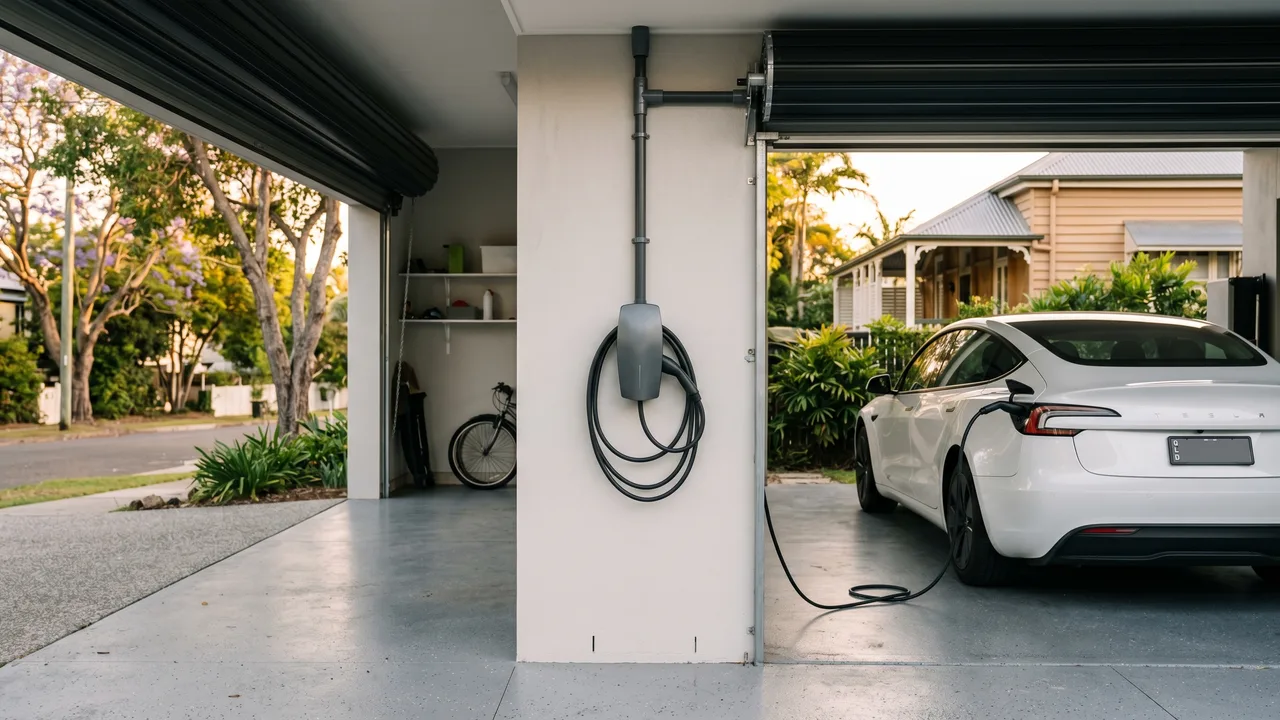
EV Charger Installation guide
Can You Install an EV Charger Yourself in Queensland?
Can You Install an EV Charger Yourself in Queensland?
Short answer: no, not legally. In Queensland, any electrical work connected to the mains supply must be done by a licensed electrician. That includes fitting a dedicated EV charger circuit, and it applies whether you live in a house in Wilston or an apartment in New Farm.
That said, it is worth understanding exactly why that rule exists, what the real risks are if you skip it, and what you should reasonably expect when you hire someone to do it properly.
What the Law Actually Says
Queensland's electrical safety framework sits under the Electrical Safety Act 2002 and is enforced by the Office of Industrial Relations. The rule is straightforward: any electrical work that connects to, or forms part of, the fixed wiring of a building must be carried out by a licenced electrical contractor. After the work is done, a Certificate of Test (COT) must be issued and the work notified to Energex.
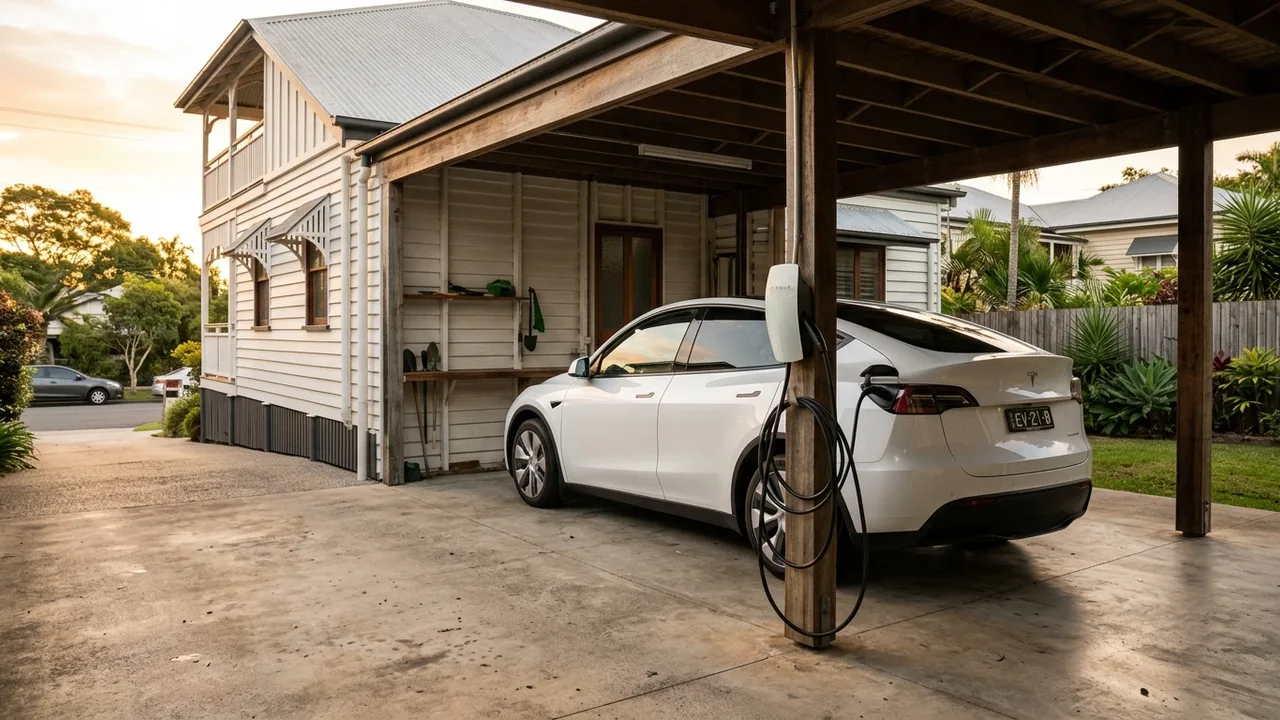
Installing a Level 2 EV charger (the kind that runs on a 240V dedicated circuit and charges at 7kW or more) is firmly in that category. You can choose the charger model, prepare the wall, read every installation manual ever written, and still need a licensed sparky to do the actual connection.
There are also practical consequences beyond the legal ones. If unlicensed electrical work contributes to a fire or injury, your home insurance policy is very likely to deny the claim. For strata buildings in Teneriffe or Bowen Hills, an unlicensed installation could also expose the body corporate to liability.
The "Portable EVSE" Exception (and Its Limits)
There is one legitimate DIY path worth knowing about. A portable EVSE (Electric Vehicle Supply Equipment) is an extension-cord style unit that plugs into a standard 10-amp GPO (general purpose outlet). You buy it, plug it in, and charge your car. No licensed work required.
The trade-offs are real, though:
- Charge speed is slow. A standard 10A socket delivers roughly 2.4kW, which means overnight charging of around 15-20 km of range per hour. Fine for a plug-in hybrid; limiting for a full BEV.
- Sustained load on a domestic socket. Drawing near-maximum current for 8-12 hours overnight stresses a standard GPO. If the socket or circuit is already degraded (common in older homes in Windsor or Albion), this is a fire risk.
- No smart features. Most portable units cannot communicate with a solar inverter, schedule off-peak charging, or integrate with a home energy management system.
Using a portable EVSE as a short-term or backup option is reasonable. Treating it as a permanent, primary charging solution is not something we would recommend, and most EV manufacturers say the same in their owner manuals.
What a Proper Installation Actually Involves
A dedicated Level 2 EV charger installation is more than pulling a wire and screwing a box to the wall. Here is what a compliant job typically covers in a Brisbane residential setting:
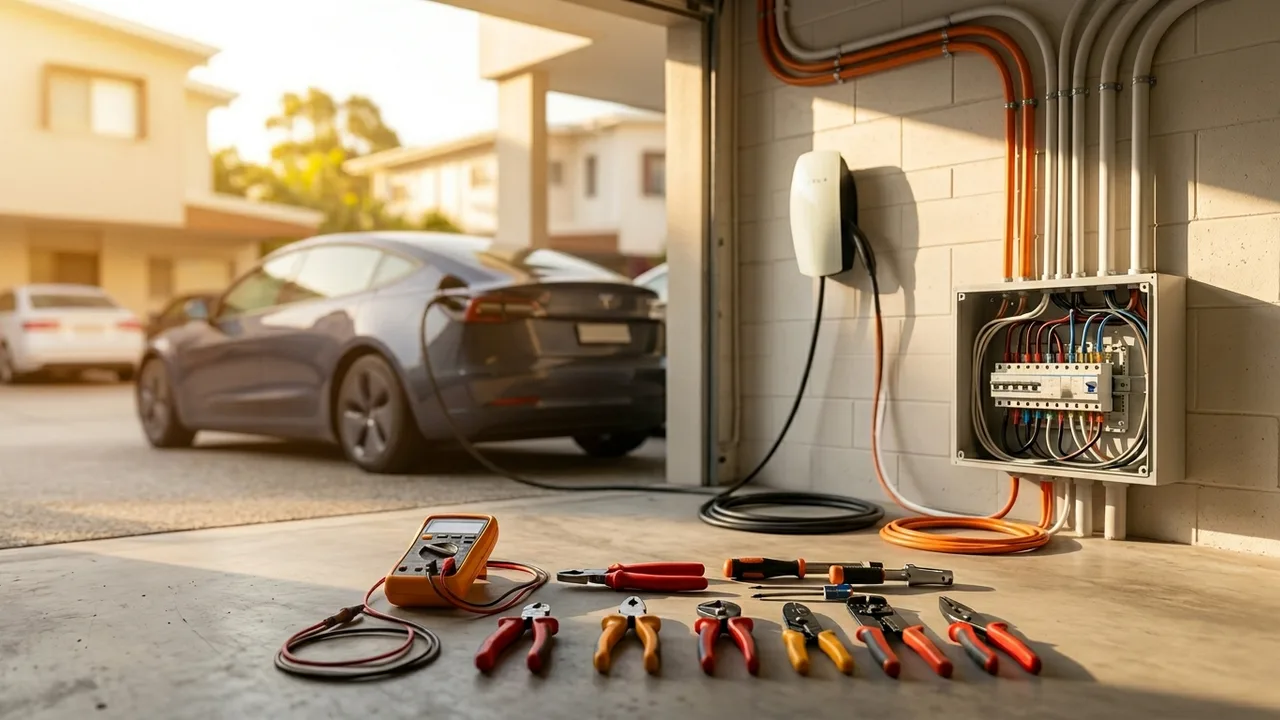
Site assessment. The electrician checks your switchboard capacity, the existing circuit load, and the physical path from the board to where the charger will sit. In Queenslander-style homes (common through Herston and Wilston), that path often runs under the house through the subfloor, which adds time and sometimes conduit.
Switchboard check or upgrade. Older switchboards in inner Brisbane suburbs often have ceramic fuse holders or older circuit breakers that cannot safely handle a dedicated EV circuit. If the board needs upgrading, that work is done first. A switchboard upgrade typically adds $600 to $1,200 to the project cost, depending on the board's age and the number of circuits.
Dedicated circuit installation. A new circuit, typically 32A, is run from the switchboard to the charger location. The cable gauge, conduit type, and protection (RCD and overcurrent) all follow Australian Standards AS/NZS 3000 (the Wiring Rules).
Charger mounting and commissioning. The wall-mounted unit is secured, wired, earthed, and tested. Most modern chargers also need a Wi-Fi or app configuration step during commissioning.
Certification. A Certificate of Test is issued. This is the document you keep for insurance purposes and for any future property sale.
A straightforward single-car garage installation in Newstead or New Farm typically runs $1,800 to $2,500. Add a switchboard upgrade, extra cable run distance, or a second charger and you are looking at $3,000 to $4,500.
Solar Integration: Worth Thinking About Before You Book
If you have rooftop solar (photovoltaic (PV) panels), booking your EV charger installation without thinking about integration first is a missed opportunity.
A solar-integrated EV charger uses excess generation from your panels to top up your car during the day rather than drawing from the grid. For most households, this means charging off solar between roughly 10am and 3pm. Over a year, the savings can be meaningful, particularly with electricity tariffs where they currently sit.
The integration requires either a charger with built-in solar sensing capability or a separate energy management device. Not every charger brand supports this, and the wiring approach differs slightly from a standalone installation. If solar integration is on your list, mention it at the quoting stage so the electrician can plan the installation accordingly rather than retrofitting later.
Apartments and Strata: A Different Problem
If you live in an apartment in Teneriffe, Bowen Hills, or New Farm, the electrical work is only part of the challenge. You also need body corporate approval before anything is installed in a basement car park.
Queensland's body corporate laws were updated in 2021 to make it harder for bodies corporate to unreasonably refuse EV charger requests, but approval is still required and the process takes time. The application typically needs to include a wiring proposal, load calculations, and confirmation that the installation will not affect common-property electrical infrastructure.
We handle apartment installations regularly across inner Brisbane, and the honest advice is: start the body corporate process early, ideally before you even buy the charger. Approvals can take anywhere from a few weeks to several months depending on how organised the committee is and when meetings are scheduled.
The Practical Recommendation
Do not attempt to install a Level 2 EV charger yourself. The legal risk, the insurance risk, and the genuine safety risk are not worth whatever you might save on labour. Queensland electrical licensing rules exist because mains electrical work done badly kills people.
What you can reasonably do yourself: research charger brands, read reviews, understand what features you want (solar integration, load balancing, app control), and figure out roughly where you want the charger mounted before the electrician arrives. That preparation makes the quoting conversation faster and reduces the chance of scope changes on the day.
If you are in Newstead, New Farm, Teneriffe, Windsor, Wilston, Albion, Herston, or Bowen Hills and you want a straight answer about what your specific installation will cost and what it involves, give us a call. We will ask a few questions about your switchboard age, your garage layout, and whether you have solar, and we can give you a realistic ballpark before you commit to anything.
Quick answers