EV Charger Installation guide
EV Charger Installation in Newstead: What Local Homeowners Need to Know
EV Charger Installation in Newstead: What Local Homeowners Need to Know
Installing an EV charger at home in Newstead is straightforward in most cases, but the details matter. The suburb's mix of character homes, newer apartments, and older switchboards means the job rarely looks identical twice. Here is what you actually need to know before you book anyone.
Why a Dedicated Home Charger Is Worth It
Plugging your EV into a standard 10-amp GPO (general-purpose outlet) works, but it is slow. Most EVs charge at roughly 2-2.4 kW on a standard outlet, which means adding only 10-15 km of range per hour. For a 60 kWh battery, a full charge from flat could take more than 24 hours that way.
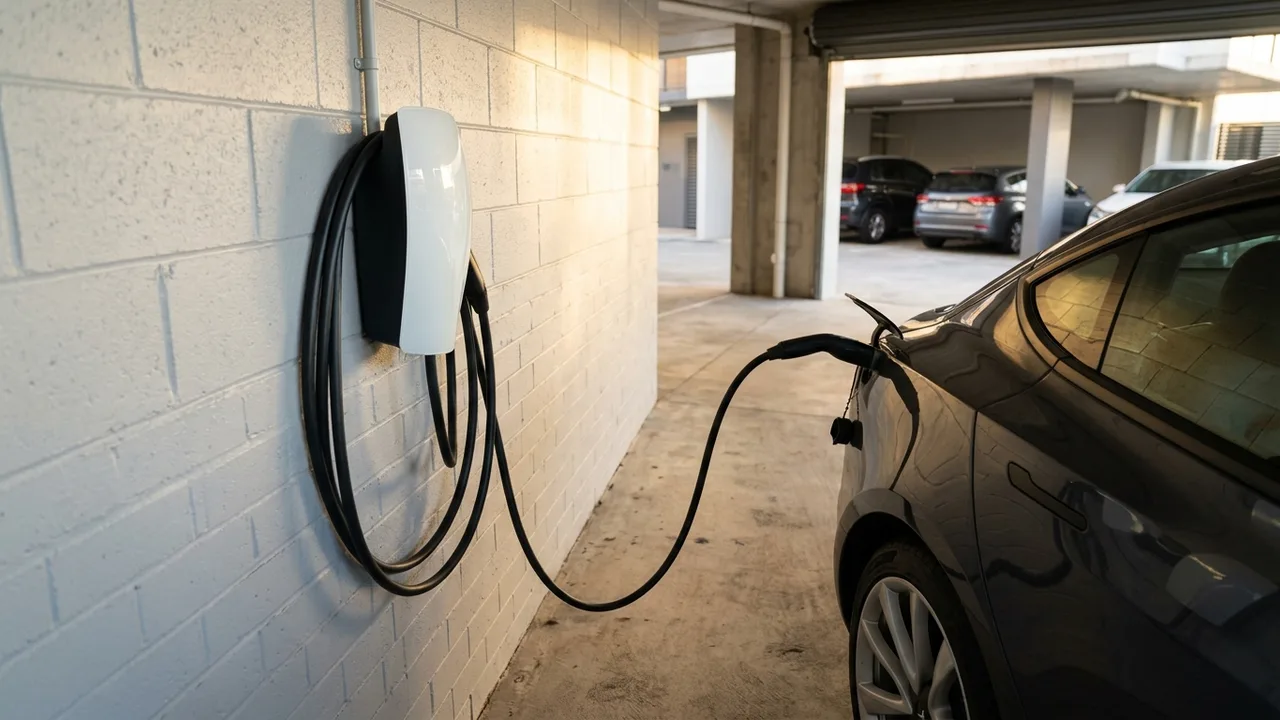
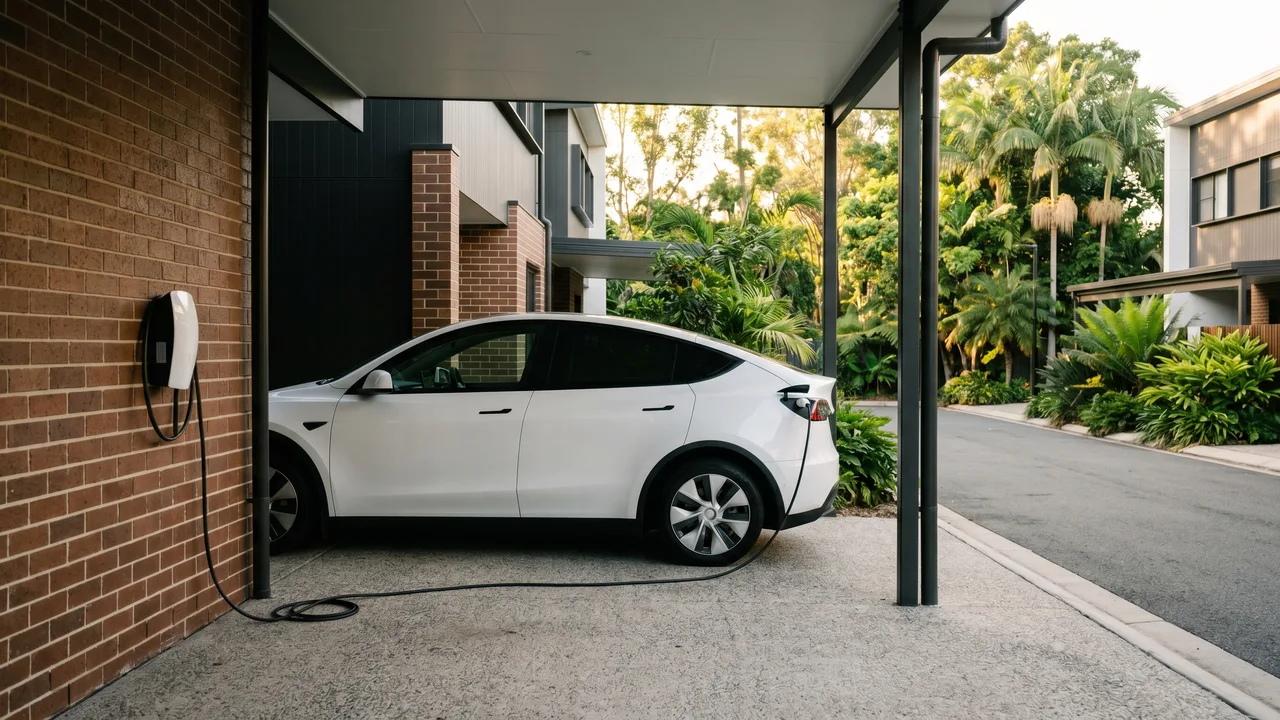
A dedicated Level 2 wall-mounted charger, wired on its own circuit and typically running at 7 kW on a single-phase supply, cuts that to around 8-10 hours. On a three-phase supply, which some Newstead homes and most newer apartments have available, you can push to 11-22 kW and halve the time again.
The practical upshot: you plug in overnight and wake up to a full car. No range anxiety, no cable draped across the driveway.
What Makes Newstead a Bit Different
Newstead 4006 and the surrounding inner-Brisbane cluster (Teneriffe, Bowen Hills, New Farm, Herston, Wilston, Windsor, Albion, and Albion) cover a wide range of housing stock. That range changes what each installation actually involves.
Queenslander and post-war homes in Wilston, Windsor, and parts of Albion often have older switchboards, sometimes 60-amp fuse-wire boards that predate modern circuit-breaker standards. These almost always need an upgrade before a dedicated EV charger circuit can be safely added. Budget for that as a possibility, not a certainty.
Townhouses and low-rise units common in Teneriffe and New Farm sometimes have single-phase supplies at the switchboard but individual meters per unit, which keeps the installation relatively contained. The garage or carport is usually close to the meter box, which helps keep cable runs short and costs down.
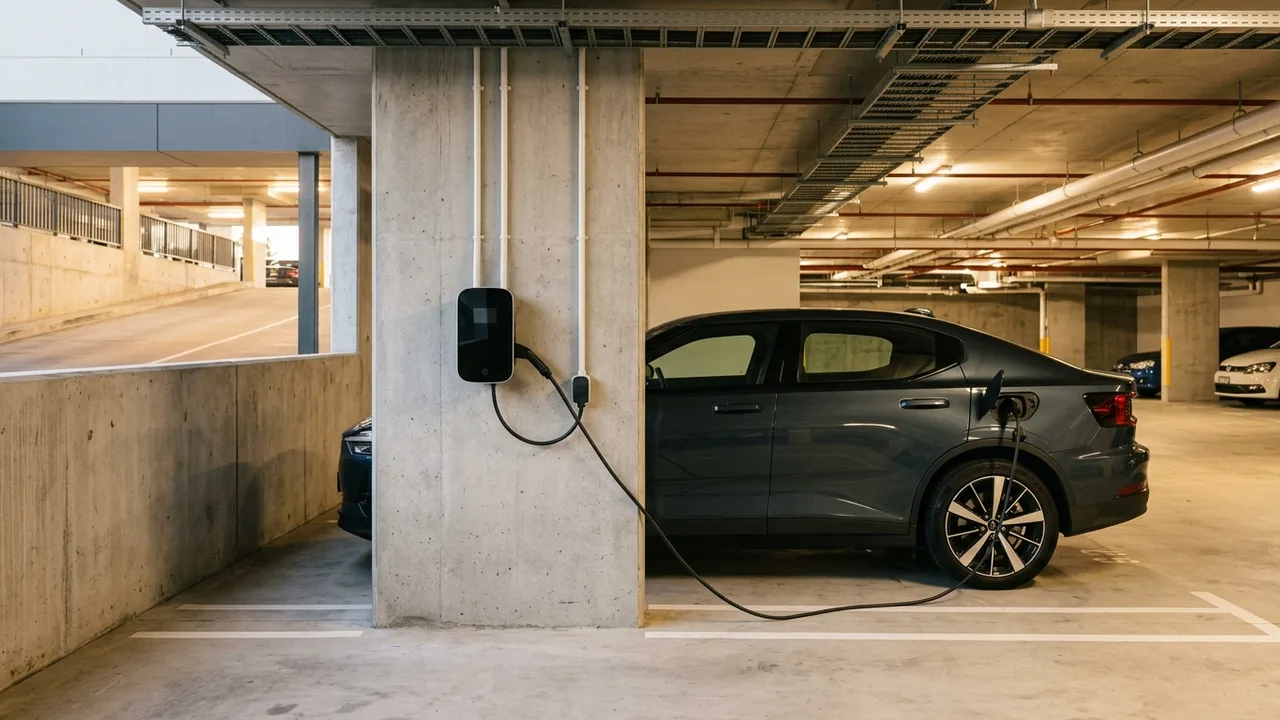
High-rise and mid-rise apartments in Newstead itself, particularly around the Gasworks precinct and along Breakfast Creek Road, are a different matter. These require body corporate approval before any work can start. The process can take weeks, and the electrical work itself often needs to integrate with the building's common property metering. It is doable, but it takes more planning.
Switchboard Upgrades: When You Need One and What It Costs
Queensland's electrical rules require a dedicated circuit for any fixed EV charger installation. If your switchboard does not have a spare circuit-breaker slot, or if it is an older fuse-wire board, it needs attention first.
A switchboard upgrade in the inner-Brisbane area typically runs $800-$1,800 depending on the board size, whether the metering needs to change, and how the wiring enters the property. Some properties in Bowen Hills and Herston, particularly those with 1970s-era switchboards tucked into the garage wall, sit at the higher end because access is tight and the boards are undersized by modern standards.
The upgrade is not optional if the board is unsafe or out of capacity. The good news is that a modern switchboard, once fitted, also makes your home safer overall and is an asset when you sell.
On a rough combined basis, most straightforward home EV charger installations in this area (including switchboard work where needed) land somewhere between $1,800 and $4,500 all up. Complex apartment jobs or properties needing significant cable runs can sit above that range.
Solar Integration: Charging Smarter, Not Just Faster
A fair number of homes in Wilston, Windsor, and the detached-house parts of Albion already have rooftop solar. If yours does, it makes sense to wire the EV charger in a way that lets you take advantage of solar generation.
The most basic approach is time-of-use scheduling: you programme the charger to run during daylight hours when your panels are generating, rather than overnight on grid power. Most modern chargers support this natively through their app.
A smarter setup uses a solar-aware charger (sometimes called a solar-matched or dynamic load charger) that reads your inverter's output in real time and adjusts the charging rate to match available solar export. Instead of sending surplus power back to the grid at the feed-in tariff (which in Queensland is typically around 5-10 cents per kWh from most retailers right now), you are putting that energy into your car. The saving per kilometre can be meaningful over time.
This kind of integration requires the charger and inverter to be compatible, and the wiring needs to be set up correctly from the start. It is worth discussing during the quoting stage rather than retrofitting later.
Apartments and Strata: The Honest Picture
If you live in one of Newstead's many apartment buildings and want a charger fitted to your basement car space, you can do it, but it takes longer than a standalone home installation.
You will need written approval from the body corporate before any electrical work begins. Under Queensland's body corporate legislation, bodies corporate generally cannot unreasonably refuse a request for EV charging infrastructure, but they can set conditions around the scope of work, who pays for any upgrades to common property, and how metering is handled.
In practice, we recommend preparing a clear written request that includes the proposed charger specifications, a basic wiring plan, and confirmation that the work will be carried out by a licensed electrician to Queensland standards. Buildings where individual car spaces are on separately metered sub-boards are the easiest to work with. Older buildings with a single common meter for all basement power need more complex metering solutions, which adds cost.
Getting approval can take anywhere from two weeks to three months depending on how active the committee is. Plan accordingly if you are buying an EV and expecting to charge at home from day one.
Choosing a Charger: A Few Honest Trade-offs
The charger hardware itself is a relatively small part of the total cost, but it is worth choosing carefully because you are likely to own it for 10-plus years.
A few things worth considering:
- Single-phase vs three-phase. If your property has three-phase power available, a three-phase charger gives you future headroom. If it does not, a single-phase 7 kW unit is perfectly adequate for most overnight charging needs.
- Tethered vs untethered. A tethered charger has the cable built in, which is convenient. An untethered (socketed) charger lets you use the cable that came with your vehicle, which matters if you ever switch between EVs with different cable types. Most Australian households find tethered more practical day to day.
- Smart features vs simplicity. Wi-Fi connected chargers that allow scheduling, energy monitoring, and solar integration are genuinely useful if you have solar or a time-of-use electricity tariff. If you are on a flat tariff and do not have solar, a simpler unit does the job and costs less.
We install a range of hardware and can talk through what makes sense for your specific setup.
A Closing Thought Before You Call Anyone
Most EV charger installations in Newstead and the surrounding suburbs are not complicated. A licensed electrician assesses your switchboard, runs a dedicated circuit to your garage or carport, mounts the charger, and certifies the work. Done properly, the job is usually completed in a few hours.
Where homeowners can get caught out is in underestimating the switchboard situation, or booking someone who does not carry out the compliance certification correctly. In Queensland, the installing electrician must issue a Certificate of Compliance for Electrical Work (CCEW). If they do not, you have a problem with your insurer and potentially with the building inspection when you sell.
If you are ready to get a clear picture of what your specific property needs and what it will cost, a site assessment is the right starting point. It does not commit you to anything, and it gives you real numbers based on your actual switchboard, cable run, and setup rather than a guess from a photo.
Quick answers