EV Charger Installation guide
How Long Does a Home EV Charger Installation Take in Brisbane?
How Long Does a Home EV Charger Installation Take in Brisbane?
For most homes in Brisbane, a straightforward home EV charger installation takes between two and four hours from start to finish. If your switchboard needs an upgrade or the cable run is unusually long, expect closer to a full day. Those two scenarios cover the vast majority of jobs we see across Newstead, New Farm, Teneriffe and the surrounding inner north suburbs.
That is the short answer. The longer one depends on several factors that are worth understanding before you book, because they directly affect cost, timing and what an electrician needs to bring with them.
What Happens on Installation Day
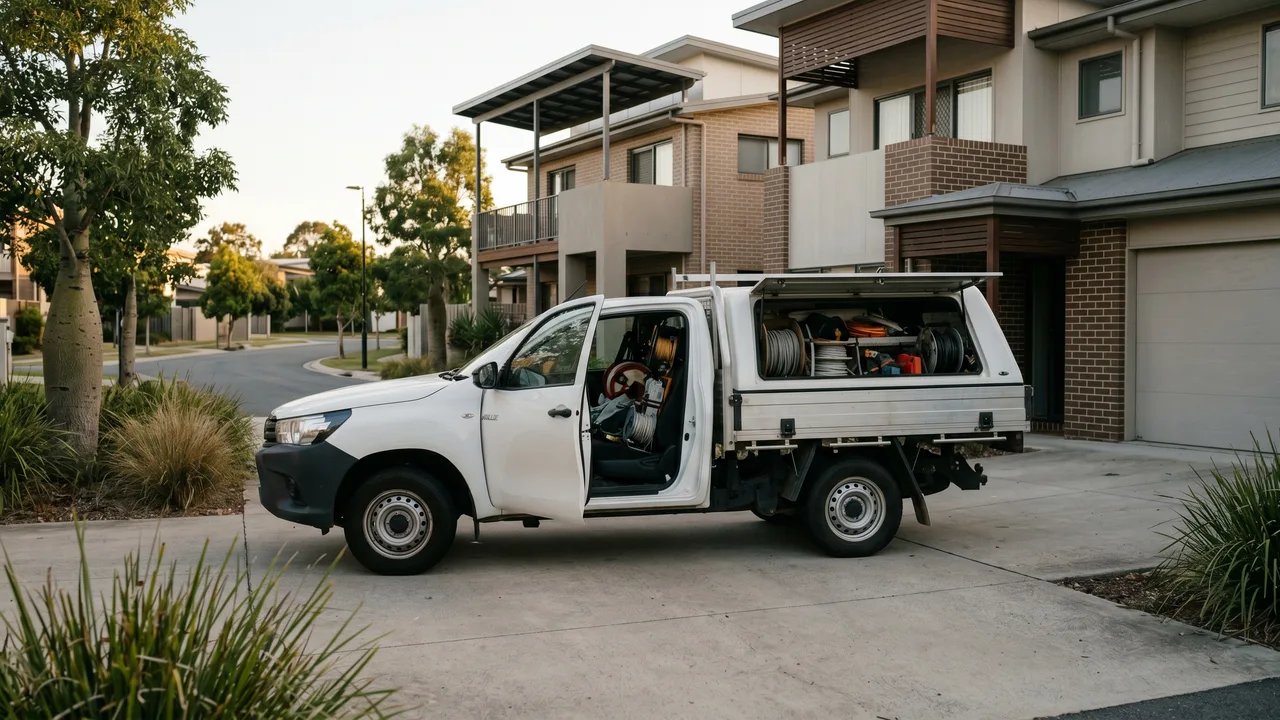
A typical job follows a fairly predictable sequence. The electrician arrives, inspects your switchboard and the intended mounting location, confirms the cable route, installs the charger unit, runs a dedicated circuit back to the board, fits a new circuit breaker, and tests everything under load. They then complete the Certificate of Compliance (CoC) documentation required under Queensland electrical safety legislation.
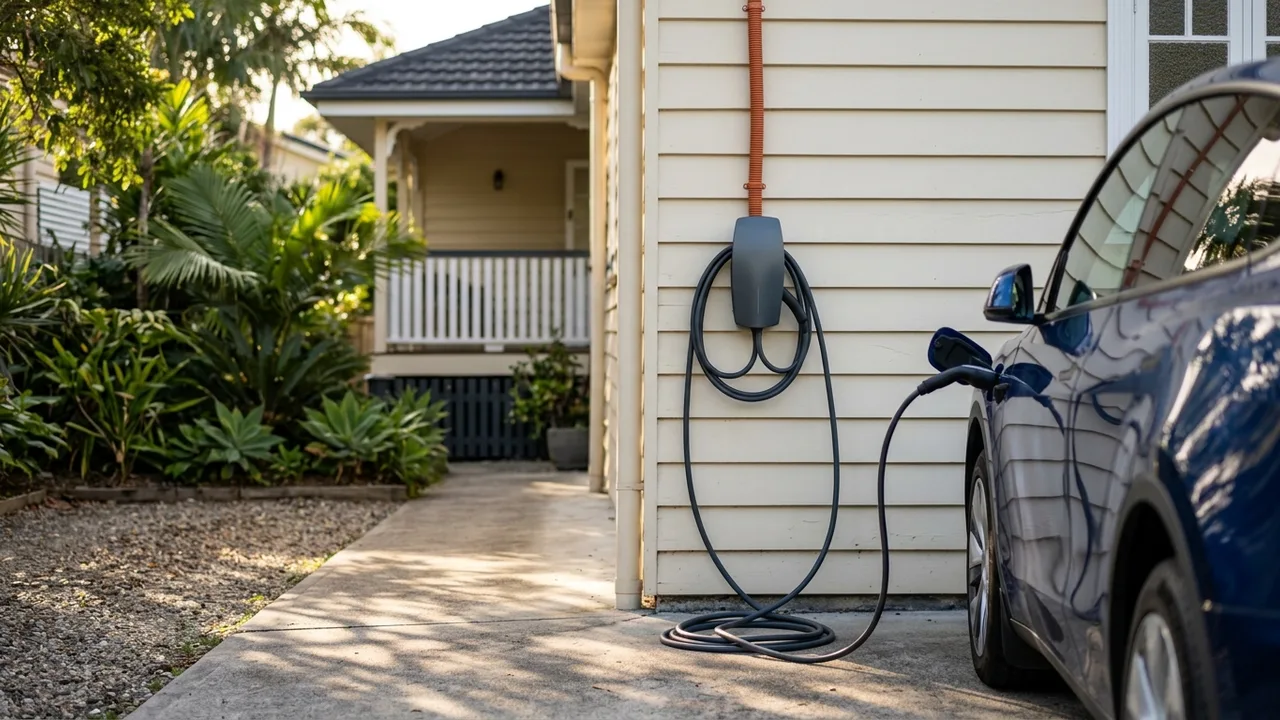
On a clean job, that whole sequence runs in two to three hours. Clean means: a modern switchboard with spare capacity, a garage or carport within a reasonable cable run of the board (typically under 15 metres), and no asbestos or enclosed wall cavities making the cable route awkward.
The CoC is not optional paperwork. In Queensland, any new dedicated circuit requires it. We lodge it with the Electrical Safety Office as part of every installation, so you have a proper record for insurance and for resale purposes.
Factors That Add Time (and Sometimes Cost)
A few things reliably push a two-hour job toward four, six, or even eight hours.
Switchboard age and condition. Older homes in Windsor, Wilston and Herston often have original ceramic fuse boards or early circuit-breaker panels with no spare capacity. Fitting a dedicated EV circuit on one of those is not safe without upgrading the board first. A switchboard upgrade typically adds two to three hours to the job and sits in the $800 to $1,500 range on top of the charger installation itself. It is worth doing properly rather than working around an old board, because the car will draw 7 kW or more for hours at a time, which is a sustained load that old fuse boards were never designed to handle.
Cable run length and route complexity. If your switchboard is in a laundry at the back of the house and the car goes in a carport at the front, the cable has to travel a fair distance, often through ceiling cavities, under the house, or along external walls. Queenslander-style homes in Albion and Wilston can make this more involved because the under-floor space, while accessible, sometimes requires awkward routing through bearer and joist layouts. Budget for extra labour if the run exceeds about 20 metres.
Three-phase versus single-phase supply. Most residential properties in inner Brisbane run single-phase power, which supports chargers up to around 7.2 kW. If your property already has three-phase supply, you have the option of a faster 11 kW or 22 kW charger. Installing on an existing three-phase board does not take meaningfully longer; it is the same process with a different circuit breaker and cable gauge.
Apartment and strata installations. These are in a category of their own. If you are in a townhouse or apartment in Bowen Hills or Newstead, you typically need body corporate approval before any work begins. Getting that approval is the longest part of the whole process, sometimes weeks or months, and it has nothing to do with the electrician's schedule. The physical installation, once approved, is usually similar in duration to a house job.
Smart Chargers vs Basic Units: Does It Affect Install Time?
Not significantly. A smart charger (one with Wi-Fi connectivity, app control, scheduled charging and load balancing) installs in the same way as a basic unit. The extra time is five to ten minutes for Wi-Fi pairing and app setup.
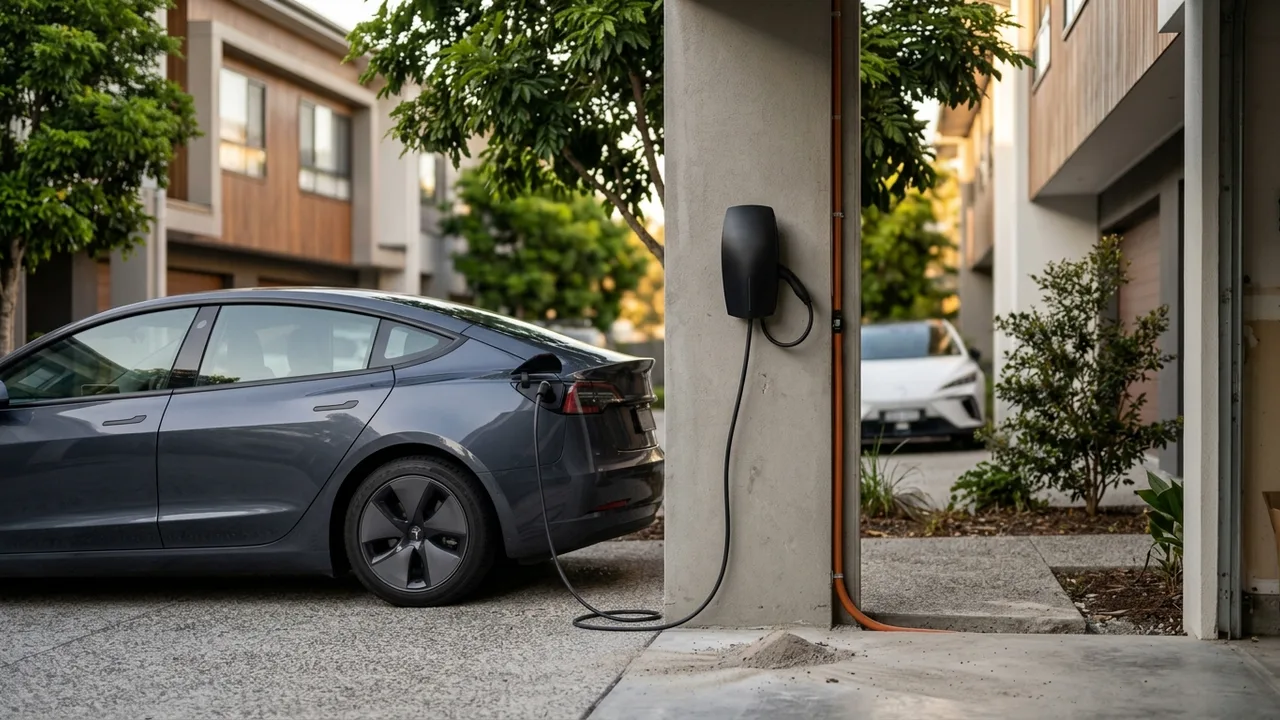
The reason to consider a smart charger is not speed of installation; it is what you get afterward. If you have rooftop solar (photovoltaic (PV) panels), a smart charger can be configured to charge primarily during the middle of the day when your panels are producing surplus power. For a home in Newstead or New Farm with a north-facing roof and a 6 kW or larger solar system, that integration can meaningfully cut the running cost of charging. We set this up at time of installation rather than leaving it as something to configure later.
Basic units cost less upfront, typically $400 to $700 for the hardware versus $700 to $1,400 for a quality smart unit. The trade-off is that you lose scheduling, load management and solar integration. If you are confident you will never add solar and you charge overnight on off-peak tariffs anyway, a basic unit is a reasonable choice.
Realistic Timelines: A Quick Reference
Here is an honest summary of what to expect based on job type.
- Standard single-phase installation, modern board, short cable run: 2 to 3 hours.
- Standard installation with a longer cable run or complex routing: 3 to 5 hours.
- Switchboard upgrade required plus charger installation: 5 to 8 hours, sometimes split across two visits.
- Three-phase installation on an existing three-phase board: 2 to 4 hours.
- Apartment or strata installation (once approved): 3 to 5 hours on-site, but allow weeks for body corporate sign-off.
Total project cost across these scenarios typically falls between $1,800 and $4,500, with the lower end reflecting a simple single-phase job on a sound switchboard and the upper end covering a switchboard upgrade, longer cable run, and a premium smart charger.
Permits, Inspections and What Queensland Requires
Queensland does not require a separate council permit for a home EV charger installation. What is required is that a licensed electrician does the work and issues a Certificate of Compliance. The CoC is your proof that the installation meets the Australian/New Zealand Wiring Rules (AS/NZS 3000) and relevant Queensland electrical safety standards.
Some homeowners ask about DIY installation. Under Queensland law, all electrical work beyond defined owner-occupier tasks must be done by a licensed electrician. Installing a dedicated 32-amp circuit is firmly outside what a homeowner can legally do themselves. Beyond the legal issue, the liability exposure if something went wrong with an unlicensed EV charger circuit, particularly in a fire insurance claim, is not worth it.
What to Sort Out Before the Electrician Arrives
A little preparation saves time on the day and occasionally saves money.
Know where your switchboard is and confirm it is accessible. If it is behind stored items in a garage or a laundry that doubles as a storage room, clear it beforehand. Check whether you have any spare circuit breaker slots visible, although the electrician will assess this properly anyway.
Think about where you actually want the charger mounted. Tethered chargers (with a cable permanently attached) are convenient but fix the cable length. Socketed chargers let you use different cables, which is useful if you might change cars. The mounting height matters too: around 1.2 to 1.5 metres off the ground is typical, positioned so the cable reaches the charge port on your car without strain.
If you have solar, have your inverter brand and model handy. Some smart charger brands integrate more cleanly with certain inverters, and knowing this before the job lets us bring the right equipment.
A Closing Thought
Installation day itself is almost never the complicated part. The preparation, the switchboard assessment, and the planning of the cable route are what determine whether a job runs smoothly or runs long. For most homes we work in across Newstead, Teneriffe, Windsor and surrounds, the physical work is done in a morning.
If you are unsure what category your home falls into, a quick site assessment before booking solves that. It means no surprises on the day and a more accurate quote. We are happy to talk through your setup over the phone first if that is easier.
Quick answers