EV Charger Installation guide
Can You Install an EV Charger in a Brisbane Rental Property?
Can You Install an EV Charger in a Brisbane Rental Property?
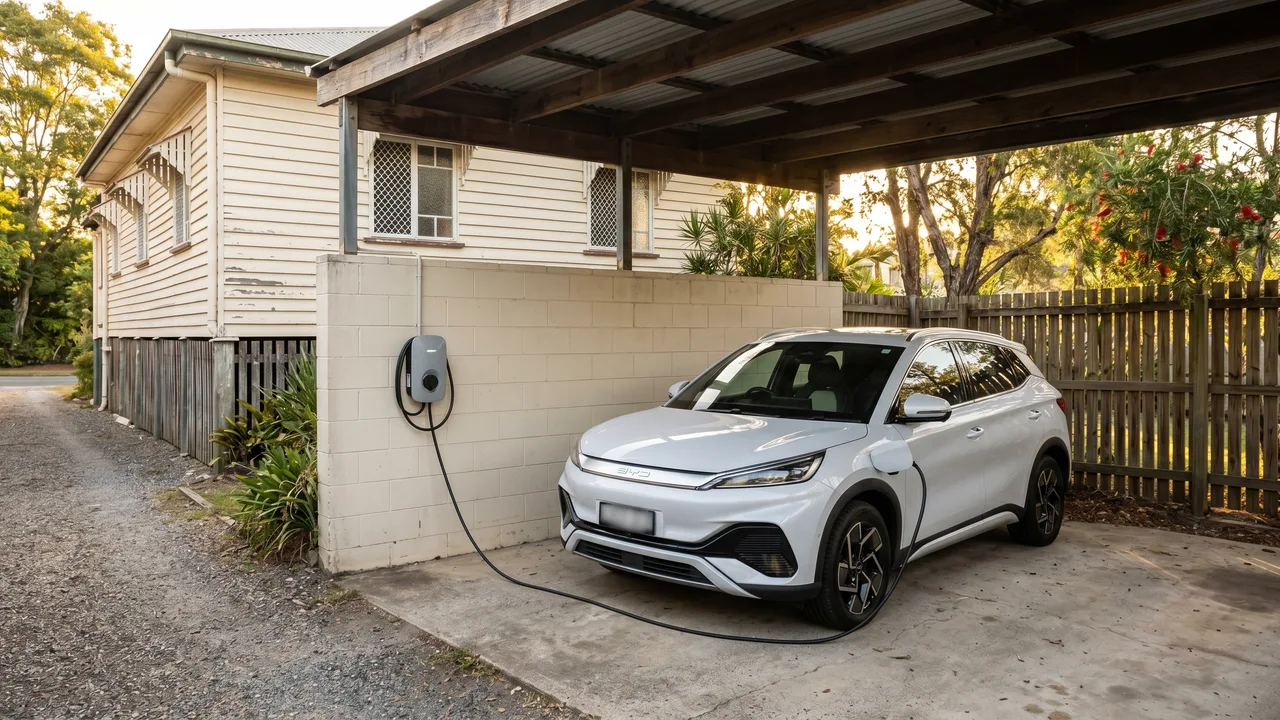
Yes, you can, but it is rarely straightforward. Whether you are a tenant who wants to charge at home or a landlord thinking about adding value to your property, there are real legal, electrical, and financial questions to work through before anyone touches a wall.
This article covers both perspectives honestly. There are scenarios where installation makes complete sense and others where you are better off waiting or negotiating first.
If You Are a Tenant: Start With Written Permission
A tenant cannot simply hire an electrician to install a charger without the landlord's consent. Under Queensland tenancy law, installing a dedicated charging circuit is a significant electrical alteration. It requires the landlord's written agreement before any work starts.
The good news is that Queensland's rental laws have evolved. Under the Residential Tenancies and Rooming Accommodation Act 2008 and more recent amendments, tenants can request certain minor upgrades, and landlords cannot refuse unreasonably in some categories. However, EV charger installation does not yet sit neatly in the "minor fixture" category. It typically involves a dedicated 32-amp circuit, a new breaker in the switchboard, and in some cases a switchboard upgrade. That puts it firmly in the "you need explicit permission" bucket.
What to put in writing:
- The specific charger model and mounting location (garage wall, carport post, etc.)
- Who pays for installation (you, the landlord, or a split arrangement)
- What happens to the charger when you vacate (you remove it, or it stays as a fixture)
- Whether the work will be carried out by a licensed electrician with a Certificate of Compliance
A well-drafted written agreement protects both parties. Do not rely on a verbal yes from a property manager.
If You Are a Landlord: Why It Might Be Worth Considering
EV uptake in Inner North Brisbane has increased noticeably over the past two years. Suburbs like Newstead, Teneriffe, New Farm, and Wilston attract tenants who are often professionals, and a portion of them drive or plan to drive electric vehicles. A property with a dedicated Level 2 home charger already installed is increasingly a practical selling point.
The financials are reasonable too. A typical Level 2 wall charger installation in this area runs somewhere between $1,800 and $4,500, depending on switchboard condition, cable run length, and the charger model. If your switchboard is already modern (a 3-phase board or a recently upgraded single-phase board), the job is often at the lower end of that range.
There is a trade-off to consider, though. Installing a fixed circuit for a specific tenant and then having that tenant leave creates a situation where the next tenant may not have an EV at all. A smart charger with a lockable output or a sub-metered circuit at least gives you flexibility. Alternatively, some landlords install the charger as a fixture and simply build it into the rental listing. Both approaches work; the right one depends on your tenant profile and how long you expect turnover to be.
From a compliance standpoint, all work must be carried out by a licensed electrician, and a Certificate of Compliance (electrical work) is required in Queensland. We provide that documentation as standard on every installation we complete.
Switchboard Condition: The Detail That Catches People Out
Many rental properties in Inner North Brisbane, particularly older Queenslanders in Windsor, Herston, and Wilston, still have original or partially upgraded switchboards. Some have ceramic fuses rather than circuit breakers. A few still run on single-phase 60-amp mains.
A dedicated EV charger circuit typically requires a 32-amp breaker and, in most installations, at least a 63-amp mains capacity to avoid nuisance tripping when the charger runs alongside a stove, air-conditioning, and hot water system simultaneously. If the existing board cannot support that, a switchboard upgrade is required before or alongside the charger installation.
Switchboard upgrades typically add $800 to $1,800 to the job, depending on scope. For a landlord weighing the investment, that cost is usually depreciable as a capital improvement. For a tenant, negotiating who pays for a switchboard upgrade is a key part of the written agreement. It is reasonable to expect the landlord to cover the switchboard work (since it improves the property) while the tenant covers the charger supply and installation. That split is worth floating.
Apartments and Townhouses: A More Complex Path
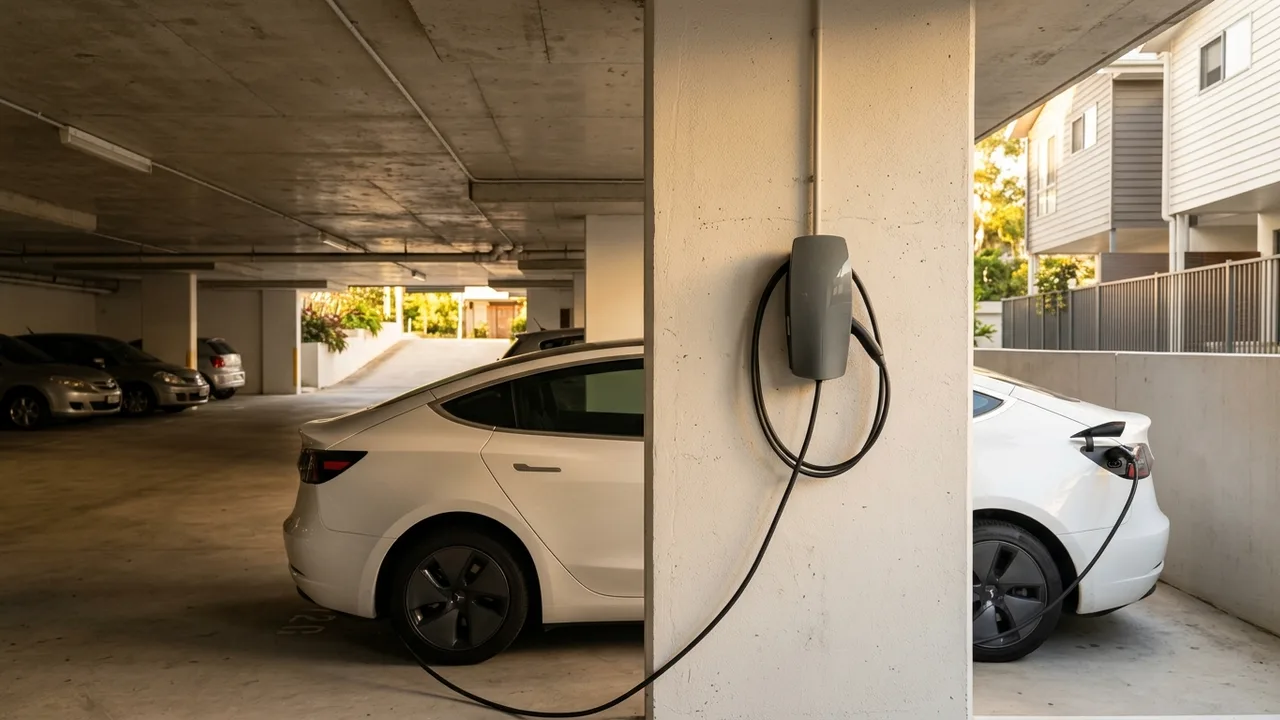
If the rental is an apartment or townhouse in a strata scheme, the process gets more involved. Common property (including the carpark, basement wiring, and switchroom) is governed by the body corporate. You cannot run a new circuit from your apartment's switchboard to a carpark bay without body corporate consent, and in some buildings the existing electrical infrastructure simply cannot support individual chargers for every unit.
That said, bodies corporate in Queensland are increasingly approving individual EV charging applications, particularly where the applicant offers to carry all installation costs and agrees to sub-metering so their electricity use is separate from building common power.
If you are a tenant in a strata building, the process is: get landlord permission first, then body corporate approval, then engage a licensed electrician for the physical work. Skipping either approval step creates real liability. We do handle apartment and townhouse installations across the Newstead, Bowen Hills, and Teneriffe area, and we can advise on what documentation you are likely to need before you approach the body corporate.
Practical Tips for Making the Request Work
Whether you are a tenant asking or a landlord being asked, a few things tend to make the process smoother.
For tenants:
- Approach the landlord with a specific proposal, not a vague question. Include a quoted cost, the charger model, and a draft agreement on who owns the equipment at lease end.
- Offer to return the wall as close as possible to its original state if you plan to remove the charger on vacating (though in practice many landlords prefer you leave it).
- Frame it as a property improvement, because for most landlords, it is.
For landlords:
- If you are going to approve it, insist on a licensed installer and ask to receive a copy of the Certificate of Compliance for your records.
- Consider a sub-metered setup or a smart charger with individual login credentials so future tenants are not inheriting the previous tenant's charging account.
- Check whether your property insurance covers the addition of EV charging equipment. Most policies do, but it is worth confirming with your insurer.
A Realistic Closing Take
EV charger installation in a rental property is doable, and in many cases it makes sense for everyone involved. The main friction points are getting the right permissions in writing, understanding what the existing switchboard can support, and working out who pays for what.
If you are in the Newstead, Teneriffe, New Farm, or surrounding Inner North Brisbane area and you want a clear picture of what a specific property would actually need, a site assessment is the most useful first step. There is no obligation to proceed, and having a written quote in hand makes the conversation with a landlord or property manager a lot more productive than going in with rough numbers from the internet.
We cover Newstead, Teneriffe, Bowen Hills, Herston, Wilston, Windsor, Albion, and New Farm. If that is where your property is, get in touch and we can take a look.
Quick answers