EV Charger Installation
Home EV Charger Installation.
What Home EV Charger Installation Involves
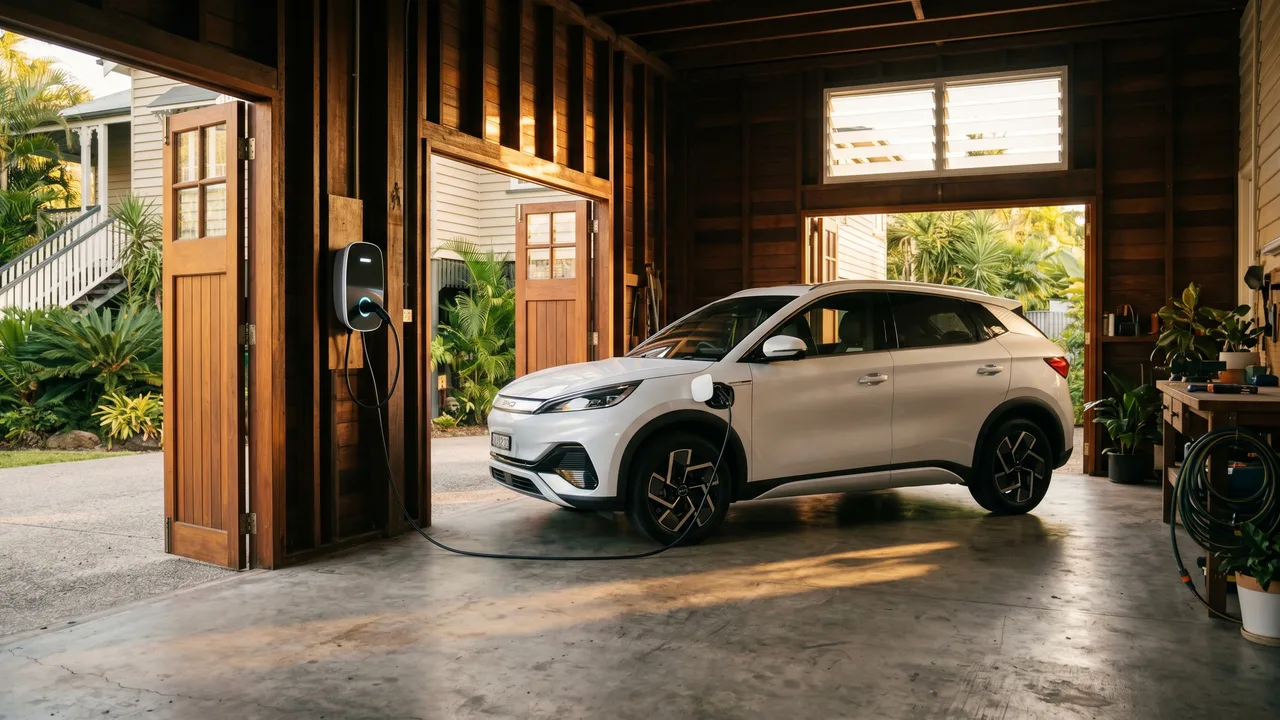
A home EV charger installation means fitting a dedicated Level 2 wall charger, typically a 7.2 kW or 11 kW unit, in your garage or carport so you can charge overnight rather than relying on a slow 10-amp power point.
The physical work covers several steps. First, we assess your switchboard to confirm it can handle a new dedicated circuit. Then we run a 32-amp (or 16-amp for smaller units) circuit from the switchboard to the charger location, install the wall box on a suitable surface, connect and test the unit, and issue a Certificate of Compliance for Electrical Work (CCEW) as required under Queensland regulations.
Materials typically include the charger itself, conduit and cable, a dedicated circuit breaker, mounting hardware, and weatherproofing where the charger is exposed to the elements. If your garage or carport is a longer cable run from the switchboard, we factor in extra conduit and cable at quoting stage.
When You Need This Service
The clearest trigger is buying or leasing an electric vehicle. Charging from a standard 10-amp household socket (known as Mode 1 or trickle charging) adds roughly 10-15 km of range per hour. A Level 2 wall charger at 7.2 kW adds closer to 40-50 km per hour, so a typical overnight charge takes you from near-empty to full rather than from near-empty to half.
You might also need this service if you currently use a portable EVSE (electric vehicle supply equipment) plugged into a general-purpose outlet and you are noticing nuisance tripping, warm plugs, or the socket showing signs of wear. That is a safety signal worth acting on promptly.
Seasonality matters less for EV charging than for, say, air conditioning, but Newstead and the broader Inner North do see high electricity demand in summer. Installing the charger before summer, when you can schedule charging for off-peak overnight hours, tends to make more financial sense than scrambling mid-January.
What It Costs in Brisbane
Most home EV charger installations in Brisbane sit between $1,800 and $4,500 all-in, including the charger unit and labour. Where your job lands depends on a handful of factors.
- Cable run length. A switchboard directly behind the garage wall is the cheapest scenario. A long run from a switchboard at the front of the house to a rear carport adds cost.
- Switchboard condition. Older homes in Wilston, Windsor, and Albion, in particular, sometimes have ceramic fuse boards or undersized main switches that need upgrading before we can add a 32-amp circuit safely. That is a separate job and is quoted separately.
- Charger model. A straightforward single-phase 7.2 kW unit costs less than a three-phase 22 kW model or a smart charger with load balancing. Most Brisbane homes are single-phase anyway, so the 22 kW option rarely applies.
- Surface and access. Concrete tilt-panel garages are straightforward. Timber Queenslander-style carports sometimes need additional surface mounting considerations.
The CCEW (compliance certificate) is included in our quotes. Council permits are not typically required for this work in Queensland, but we confirm that at quoting stage.
What Is and Is Not Included in a Quote
Included as standard:
- Supply of the agreed charger unit
- All cable, conduit, and circuit breaker for the dedicated circuit
- Wall mounting and weatherproofing
- Testing and commissioning
- Certificate of Compliance for Electrical Work (CCEW)
Quoted separately if required:
- Switchboard upgrades or replacement
- Trenching for underground conduit (for detached garages with no existing conduit path)
- Additional concrete-core drilling where walls cannot be surface-run
- Smart home or solar integration (we offer that as a separate service)
We will flag any of these at the initial site assessment so there are no surprises on the day.
Is This the Right Service for Your Property?
This service suits you if you own a house, townhouse, or unit where you have a private garage or carport and your switchboard is in good condition or already upgraded.
If you live in a strata apartment or a multi-unit complex, our apartment and townhouse EV charger installation service is a better fit, as it deals with body corporate approvals and shared electrical infrastructure.
If your switchboard has ceramic fuses, no spare circuit positions, or a main switch rated under 63 amps, look at our switchboard upgrade service first. We can quote both together if that is your situation.
A Straightforward Note on Safety and Qualifications
EV charger installation is electrical work. In Queensland, it must be carried out by a licensed electrical contractor and the work must be covered by a CCEW. This is not a DIY job, and it is not something a handyman can legally complete.
Using an unlicensed installer voids your charger warranty in most cases and can affect your home insurance if a fault later causes damage. We are a licensed electrical contractor operating under Queensland's Electrical Safety Act 2002, and every job we complete gets its own compliance paperwork.
If you have an existing charger installed by a previous owner and you are unsure whether it was done properly, our EV charger safety inspection service is worth considering before you start using it regularly.
If you want to know exactly what your Newstead or Inner North Brisbane property would involve, the quickest step is to call us with the rough location of your switchboard and your planned charger spot. Most quotes are straightforward once we have those two details.
Quick answers
Frequently asked.
How long does a home EV charger installation take?
Do I need council approval to install an EV charger at my Brisbane home?
What charger brands do you supply and install?
Can my existing switchboard handle an EV charger?
Will a Level 2 home charger work with any electric vehicle?
What is the difference between a 7.2 kW and an 11 kW home charger?
Ready to book
Quickest is by phone.
Up-front pricing on the call. Booked in one go. No site visit needed.